Molly's More or Less Quest
The only kids' entry here that covers equal to alongside more and less, and reads its questions aloud — which is what a pre-reader actually needs.
Opens abcya.com in a new tab.
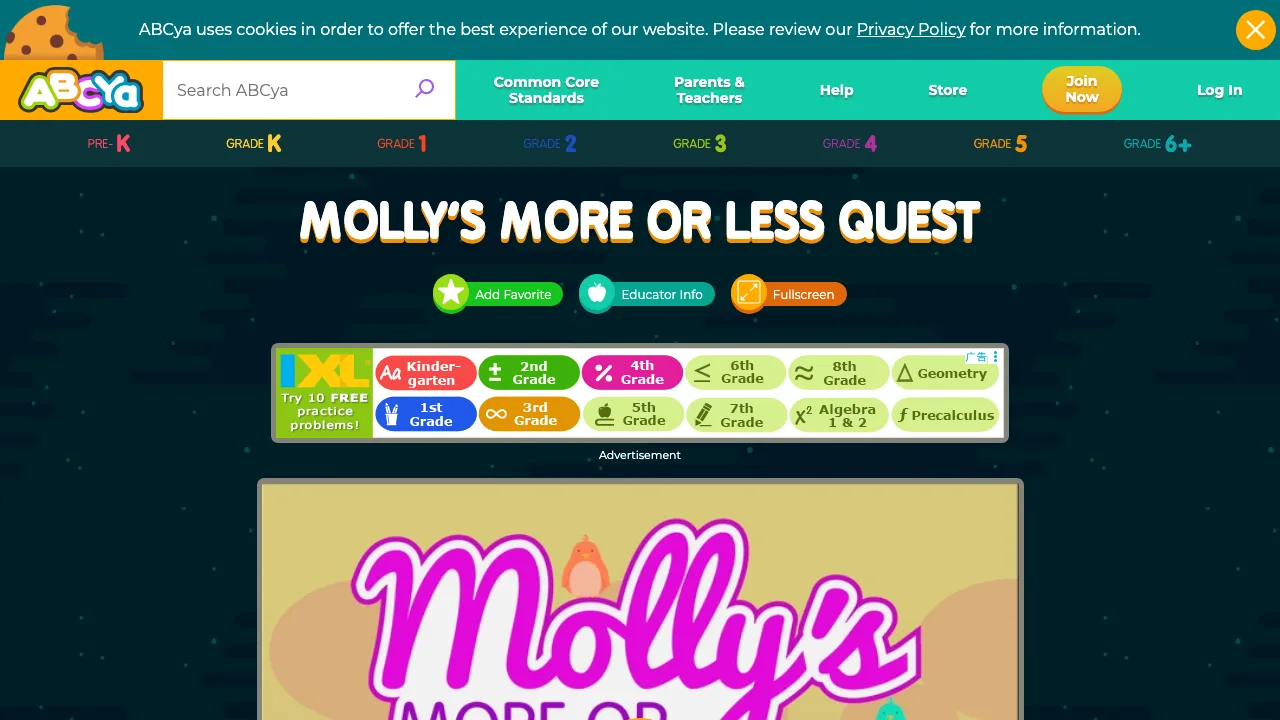
Screenshot captured by us on August 23, 2026.
The facts
- Type
- Game
- Platform
- ABCya
- Topics
- Kids and Math
- Play modes
- Classroom
- Account
- Optional login
- Price
- Free to play
- Data type
- No dataset
- Data date
- Not published
- Mobile
- Good
- Ads
- Light
Last checked by a person on August 23, 2026.
Where the numbers come from
None — the activity generates its own object groups
This game has no external dataset, so its content does not go out of date.
The concept most games leave out
More and less is only two thirds of the idea. The third is equal to, and a child who has only ever been asked which pile is bigger will hesitate the first time both piles match.
This activity includes it: Are there more, less, or the same number of items? That is a small difference in wording and a meaningful one in teaching.
Read aloud
The questions are spoken. For the Pre-K end of this age range that is the difference between an activity a child can do alone and one that needs an adult sitting beside them reading the screen.
Most entries in this category are silent, and quietly assume a reading level their stated age range does not have.
The account prompt
A “Join to play” panel appears on the page. The core activity is free and playable without it — what an account adds is saved progress and favourites — but the prompt reads more like a wall than it is, which is worth knowing before you put it in front of a class.
Two advertising networks load, plus a labelled advertisement slot next to the activity.
Age fit
Pre-K and Kindergarten are stated on the page. At the upper end of that range some children will find the unicorn framing childish, and the Topmarks alternative — which lets a teacher raise the number range — will hold them longer.
Verdict in detail
What works
- Includes equal to, not just more and less, which is the concept most similar games skip
- Questions are read aloud, so a child who cannot yet read can play unaided
- Clearly graded — Pre-K and Kindergarten are labelled on the page, not left to guess
- A full-screen button, and the core game plays without an account
What does not
- A Join to play prompt appears, which reads as a wall even though the game is free
- Two advertising networks, plus an in-page advertisement slot beside the activity
- The character framing will feel babyish to children at the top of the age range
- Progress tracking needs an account
Best for
- Pre-K and Kindergarten
- Pre-readers
- Teaching equal to alongside more and less
Similar games
Comparable games from other developers, so you can see how this one stacks up rather than taking our word for it.
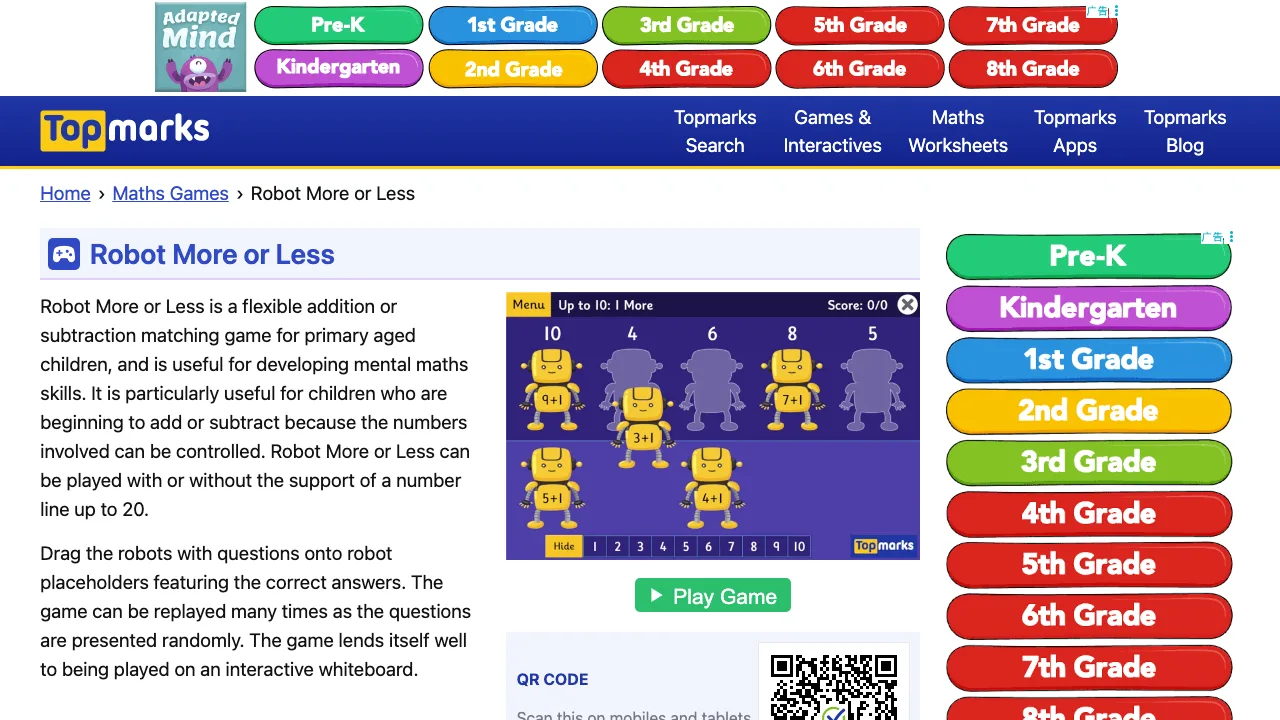
The strongest classroom entry in this category: number ranges can be controlled by the teacher, an optional number line supports children who need it, and no account is involved.
Topmarks
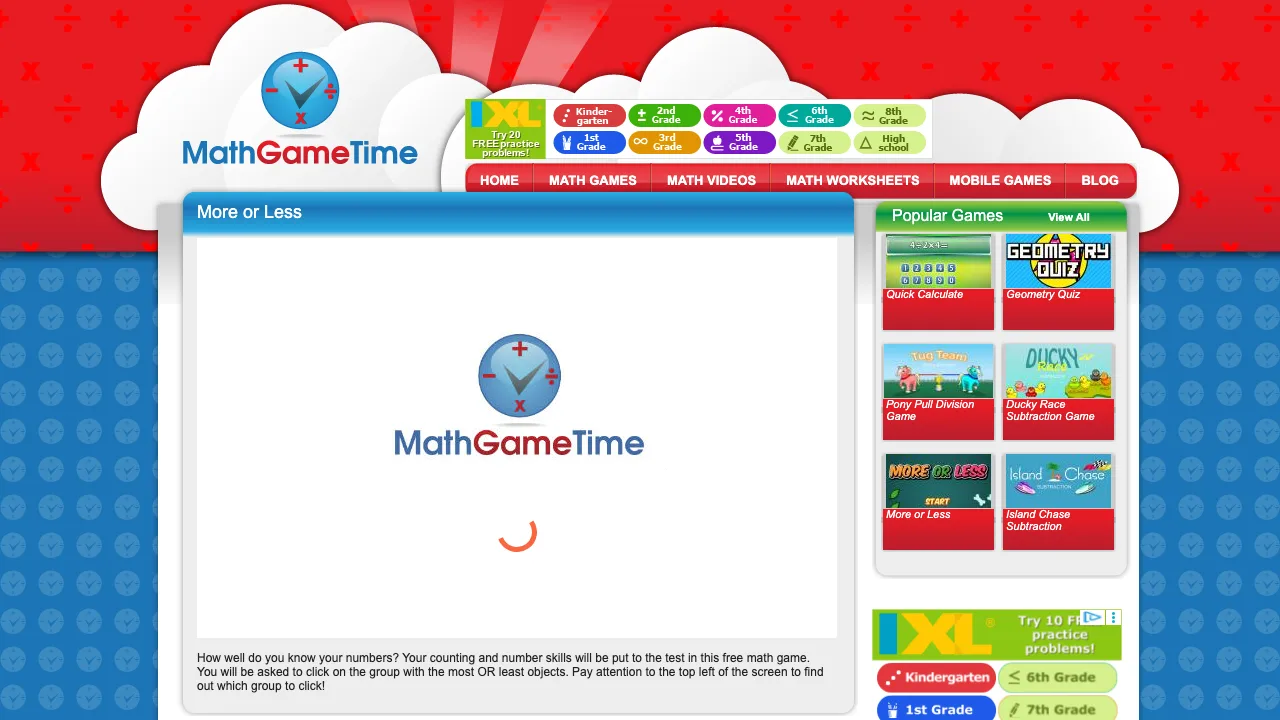
Adds a speed element to group comparison, and pairs the game with worksheets and videos on the same topic — useful for a teacher who needs more than one activity.
Math Game Time
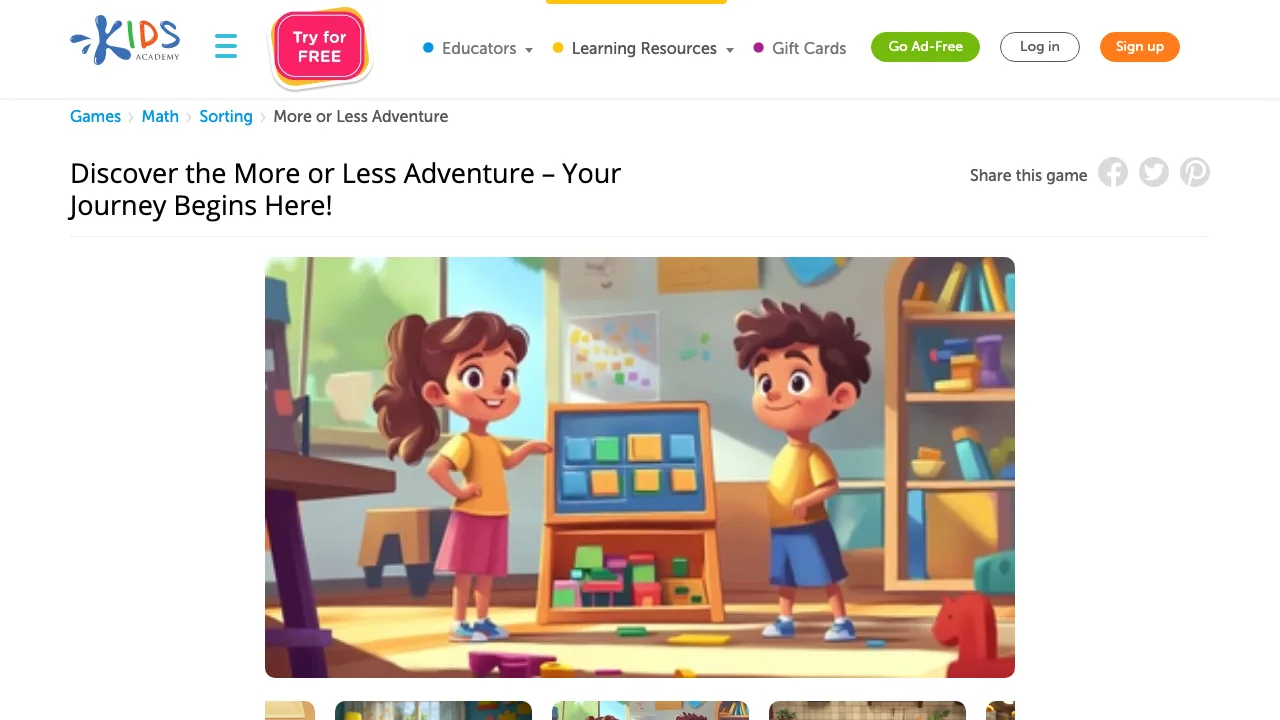
A clearly aimed 4-to-7 comparison game using everyday objects rather than abstract numbers, wrapped in more sign-up and ad-free upselling than the activity warrants.
Kids Academy